J. Fragale & Sons Paving

Asphalt Driveway

How Long Does Asphalt Take to Cure? Drying, Driving & Hardening Timeline

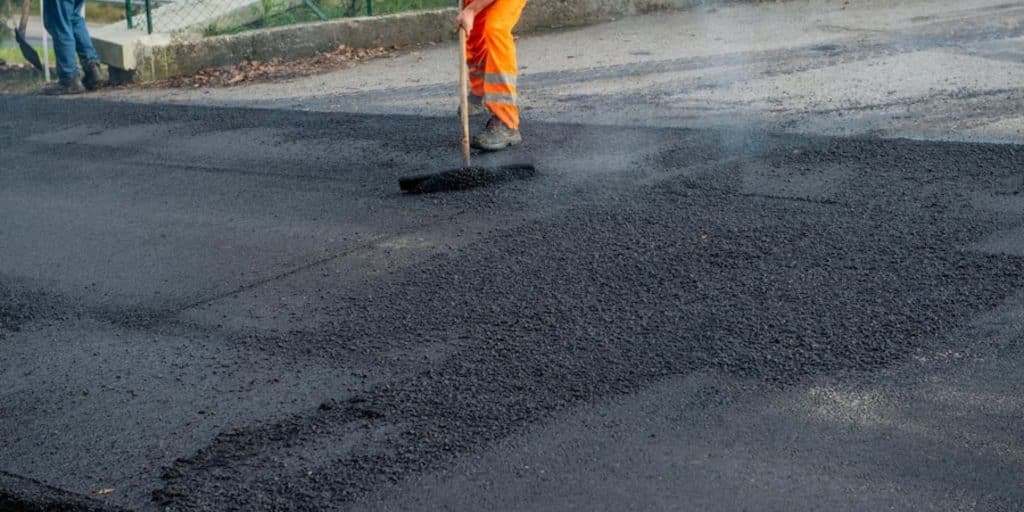
New asphalt typically needs 24 to 72 hours before normal use, but complete asphalt curing is commonly estimated at 6 to 12 months. Homeowners can generally walk on fresh asphalt within 24 hours and drive on it after approximately 48 to 72 hours, depending on weather and installation conditions. During the following months, the asphalt

How Long Does Asphalt Take to Cure? Drying, Driving & Hardening Timeline Read More »
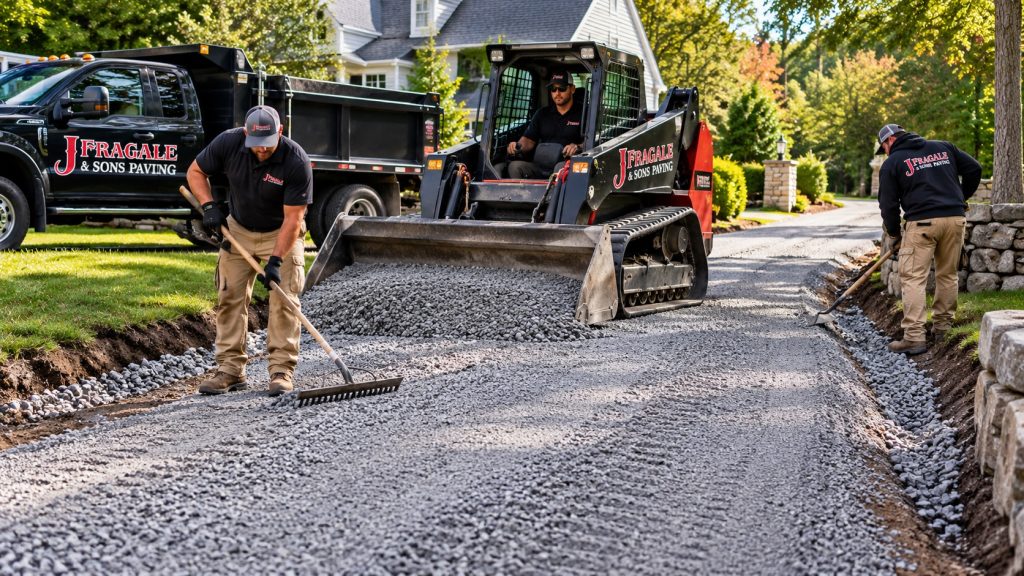
Gravel Driveway Ruts: Why They Form and How to Fix Them for Good

Gravel driveway ruts develop when vehicle weight displaces loose aggregate, water weakens the underlying soil, or the driveway lacks proper grading and compaction. Lasting gravel rut repair involves correcting drainage, removing unstable material, rebuilding the aggregate base, and compacting it properly. For Connecticut homeowners experiencing repeated driveway washouts, professional grading or converting to an asphalt

Gravel Driveway Ruts: Why They Form and How to Fix Them for Good Read More »

Private Road Asphalt Thickness: How Thick Should Asphalt and Road Base Be?

Most lightly traveled private roads start with approximately 3 to 4 inches of compacted asphalt over 8 to 12 inches of properly compacted aggregate base. Roads regularly carrying garbage trucks, delivery vehicles, or heavy equipment may need 4 to 6 inches or more of asphalt, with a stronger foundation. The correct private road asphalt thickness

Private Road Asphalt Thickness: How Thick Should Asphalt and Road Base Be? Read More »

Asphalt Driveway Lifespan in Connecticut: How Long Should Your Driveway Last?

So, how long does an asphalt driveway last in Connecticut? A properly built and maintained asphalt driveway can commonly provide 15 to 20 years of service, and sometimes longer when the stone base is stable, drainage works properly, cracks are repaired early, and the surface receives appropriate maintenance. J. Fragale & Sons Paving notes that

Asphalt Driveway Lifespan in Connecticut: How Long Should Your Driveway Last? Read More »

Asphalt Driveway Aprons in Connecticut: Where Your Driveway Meets the Road

An asphalt driveway apron is the transition area where a private driveway meets the street, curb, gutter, or public right-of-way. A properly built apron needs a stable base, correct elevation, drainage, compaction, and a smooth connection to the roadway. In Connecticut, work near a state or municipal right-of-way may also require approval, so apron replacement

Asphalt Driveway Aprons in Connecticut: Where Your Driveway Meets the Road Read More »

Why Is My Asphalt Driveway Rutting and Sinking

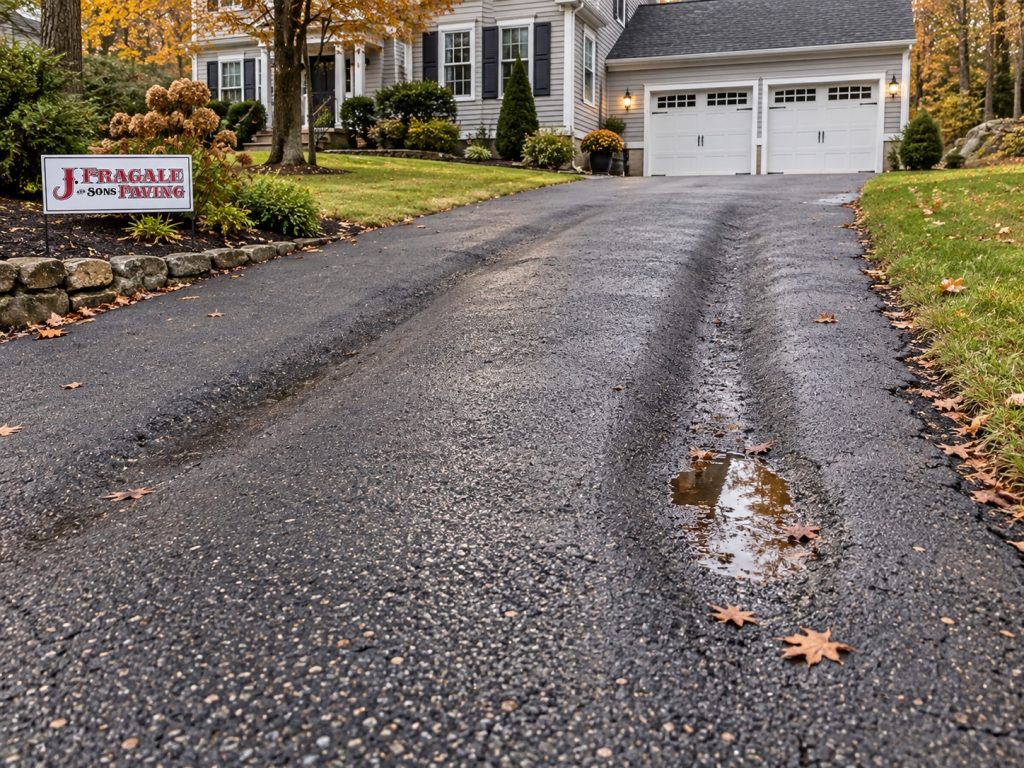
Asphalt rutting happens when repeated vehicle loads create permanent depressions in wheel paths. Some ruts develop because the asphalt surface itself deforms, while others form because the processed gravel base, subbase, or soil underneath has weakened or settled. Deep or recurring ruts often require more than surface patching. The correct repair depends on which pavement

Why Is My Asphalt Driveway Rutting and Sinking Read More »

Asphalt Overlay vs. Full Replacement: How to Know What Your Driveway Needs

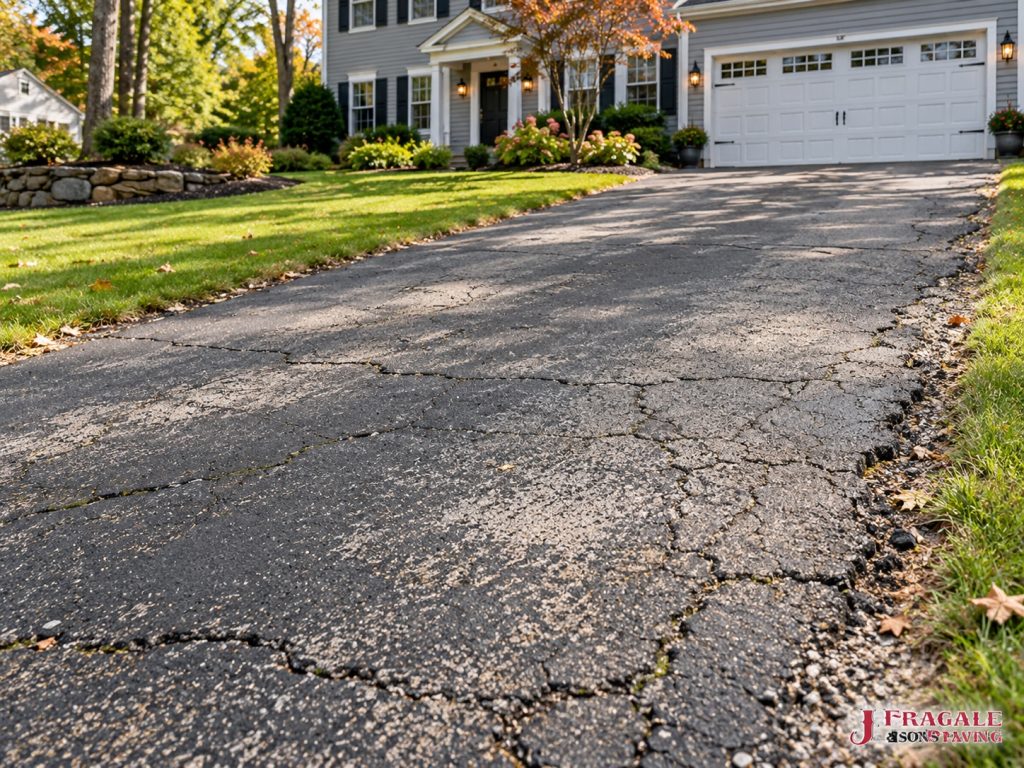
An asphalt overlay vs replacement decision comes down to what is failing. If the driveway has oxidation, minor cracking, surface wear, or shallow deterioration but the base remains solid and drains properly, resurfacing may restore the pavement without a complete tear-out. If the driveway has widespread alligator cracking, sinking sections, deep ruts, recurring potholes, or

Asphalt Overlay vs. Full Replacement: How to Know What Your Driveway Needs Read More »

Asphalt

Fall Asphalt Driveway Maintenance Checklist: Prepare Your Connecticut Blacktop for Winter

To prepare asphalt for winter, repair open cracks before freezing temperatures arrive, patch potholes, clear leaves and debris, restore drainage along driveway edges, redirect downspouts, and sealcoat when pavement condition and weather allow. At J. Fragale & Sons Paving, we focus first on stopping water from reaching the aggregate base. Water entering cracks can freeze,

Fall Asphalt Driveway Maintenance Checklist: Prepare Your Connecticut Blacktop for Winter Read More »

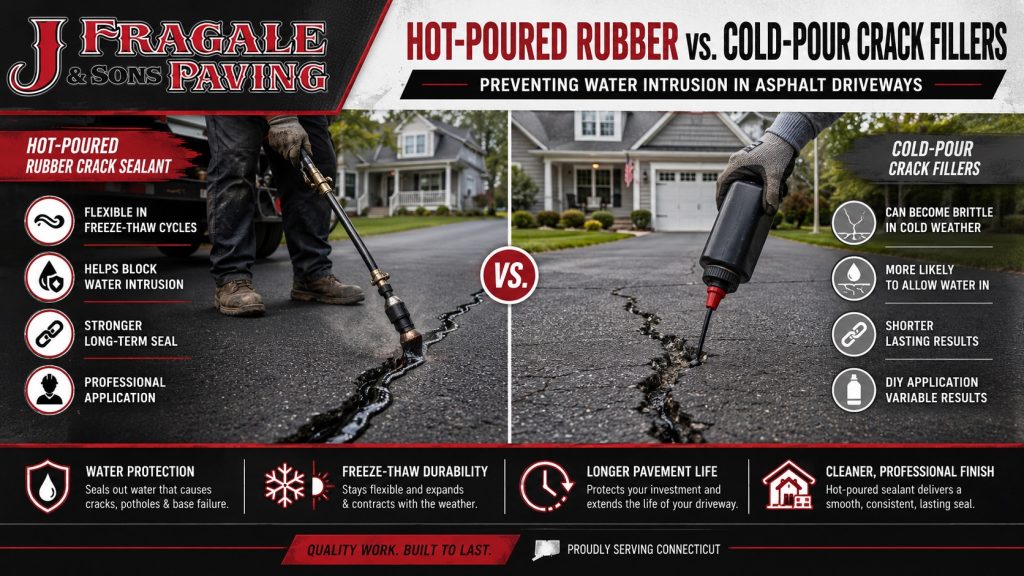
Hot Rubber Crack Sealing vs. Cold-Pour Fillers: Best Asphalt Crack Repair for Connecticut Driveways

For working asphalt cracks that expand and contract through Connecticut temperature swings, hot-applied rubberized crack sealant is generally the stronger professional repair option. Hot-pour materials use an asphalt base modified with rubber or other polymers to improve flexibility, helping the seal remain bonded as cracks open during cold weather and tighten during warmer conditions. Common

Hot Rubber Crack Sealing vs. Cold-Pour Fillers: Best Asphalt Crack Repair for Connecticut Driveways Read More »

convert gravel to asphalt

Converting a Gravel Driveway to Asphalt in Connecticut: Base Prep That Prevents Settling

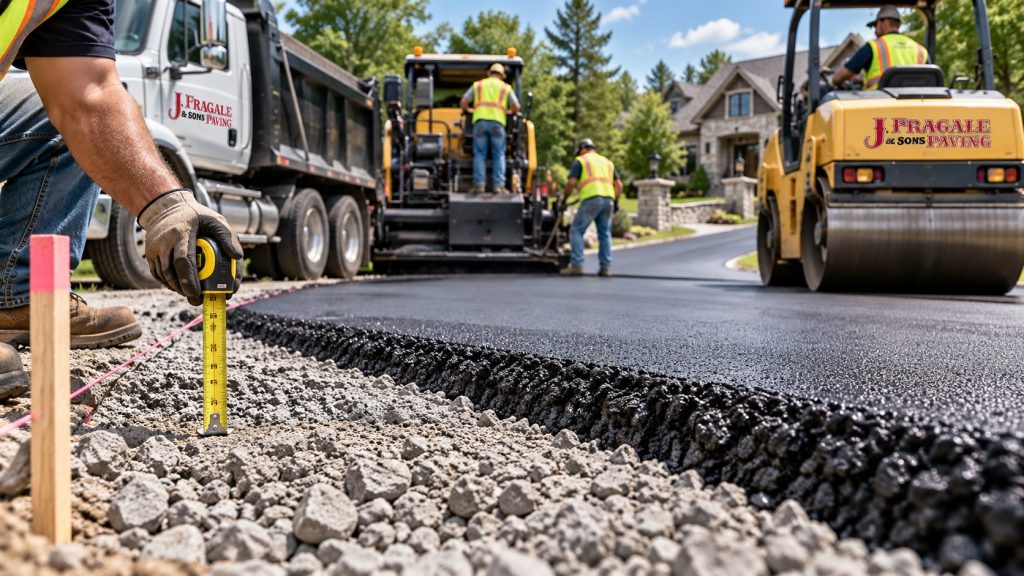
An existing gravel driveway can often be converted to asphalt, but asphalt should not simply be placed over loose stone. A successful gravel driveway prep for asphalt starts by evaluating the soil below the stone, removing organic material and unstable areas, confirming drainage, reshaping the existing aggregate, adding processed gravel where needed, and compacting the

Converting a Gravel Driveway to Asphalt in Connecticut: Base Prep That Prevents Settling Read More »