
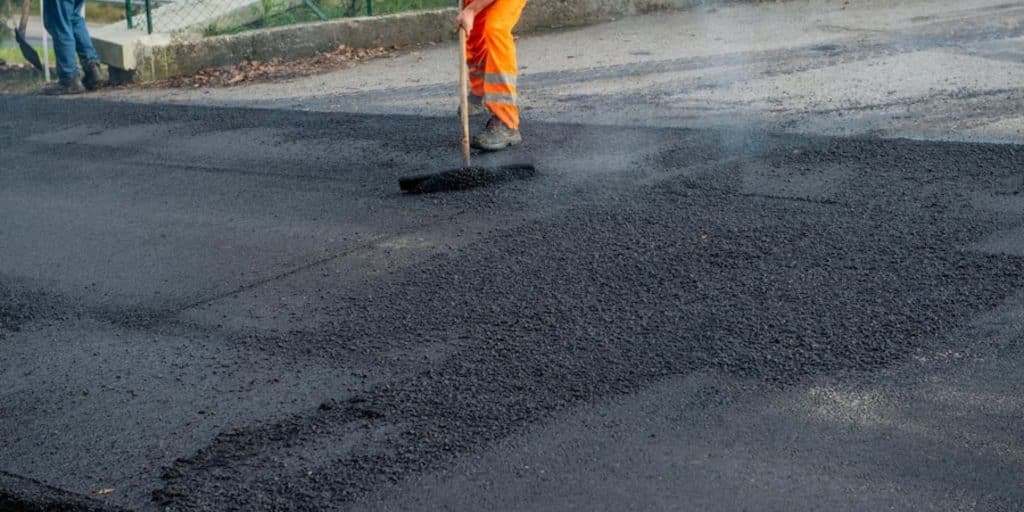
To prepare asphalt for winter, repair open cracks before freezing temperatures arrive, patch potholes, clear leaves and debris, restore drainage along driveway edges, redirect downspouts, and sealcoat when pavement condition and weather allow. At J. Fragale & Sons Paving, we focus first on stopping water from reaching the aggregate base. Water entering cracks can freeze, expand, cause frost heave, and weaken pavement support during spring thaw. Connecticut driveways benefit most when these problems are corrected before repeated freeze-thaw cycles begin.
Why Fall Driveway Maintenance Matters in Connecticut
New England blacktop faces a difficult winter combination:
- Rain followed by freezing temperatures
- Snowmelt entering pavement cracks
- Repeated freeze-thaw cycles
- Snowplow traffic
- Ice-control chemicals
- Saturated driveway edges
- Poor drainage beneath pavement
Asphalt is flexible, but the base underneath must remain stable.
When water penetrates a crack and reaches the gravel base, freezing conditions can push the pavement upward. Once the ground thaws, weakened or displaced material may settle unevenly.
That is how a small fall crack can become a spring pothole, depression, or frost heave.
1. Inspect the Driveway Before Leaves and Snow Cover It
Walk the entire driveway during early fall and look for:
- Hairline cracks
- Wider moving cracks
- Potholes
- Crumbling edges
- Low spots
- Standing water
- Loose aggregate
- Depressed pavement
- Vegetation growing through cracks
Mark questionable areas so repairs can be completed before cold weather makes asphalt maintenance harder.
Small cracks are much easier to manage before water repeatedly enters them.
2. Seal Cracks Before Meltwater Gets Into the Base
Crack sealing is one of the most valuable forms of driveway maintenance before snow.
Even a narrow opening can provide a path for rain and melting snow.
For cracks that expand and contract with seasonal temperatures, professional rubberized crack-sealing materials can help reduce water infiltration while remaining flexible.
At J. Fragale & Sons Paving, our asphalt maintenance services include crack filling, patching, sealcoating, and other repairs designed to extend pavement life.
Do not assume sealcoating alone will fill structural cracks. Open cracks should be repaired before a protective surface coating is applied.
3. Patch Potholes and Broken Pavement
A pothole already represents more advanced pavement deterioration.
Leaving one open through winter gives water, snow, and ice direct access to the underlying base.
Potholes can also become larger when:
- Snowplows strike broken edges
- Water freezes inside the damaged area
- Vehicle tires loosen surrounding asphalt
- Spring thaw weakens the base
Repairing these areas before winter can reduce how much pavement must eventually be removed and replaced.
4. Clear Driveway Edge Drainage
A driveway should shed water rather than hold it.
Before winter, clear:
- Leaves from driveway shoulders
- Sediment around catch basins
- Blocked drainage outlets
- Overgrown vegetation along pavement edges
- Gravel that obstructs runoff paths
Check where downspouts discharge as well.
A roof downspout dumping directly onto blacktop can repeatedly send water across the same area, where it may freeze into ice or enter pavement cracks.
Fragale’s winter-maintenance guidance specifically recommends cleaning drainage outlets, correcting pooling, and confirming that downspouts do not discharge onto the driveway.
5. Consider Sealcoating Before Cold Weather
Sealcoating can help slow oxidation and reduce the number of small surface voids where moisture can collect.
It works best on structurally sound asphalt after necessary crack and patch repairs have already been completed.
Fragale notes that sealcoating helps create a smoother pavement surface so water sheds rather than lingering within weathered surface texture.
Temperature and curing conditions matter, so late-season applications should only be completed when the product manufacturer and weather conditions allow proper curing.
6. Mark the Driveway for Snowplow Operators
Place visible markers along:
- Driveway edges
- Curves
- Drainage structures
- Culvert ends
- Raised borders
- Landscape walls
This helps a plow operator distinguish pavement from lawn or gravel once everything is covered in snow.
It can also reduce edge damage caused by a plow blade leaving the paved surface.
7. Rock Salt vs. Calcium Chloride on Asphalt
Homeowners often worry about rock salt damage to asphalt.
Sodium chloride, commonly called rock salt, and calcium chloride do not generally attack asphalt binder in the same way deicing chemicals can damage certain concrete surfaces. The bigger asphalt concerns are often water penetration, freeze-thaw deterioration, overapplication, drainage, and damage to nearby vegetation or metal.
Sodium Chloride
Rock salt is:
- Widely available
- Relatively inexpensive
- Effective during moderate winter temperatures
Its ice-melting effectiveness declines as pavement temperatures get colder.
Calcium Chloride
Calcium chloride generally performs better at lower temperatures and attracts moisture, helping it form brine more readily.
FHWA notes that calcium chloride has advantages over sodium chloride in cold-weather operations partly because of its hygroscopic properties.
For residential blacktop, we recommend mechanically removing snow first and applying only the minimum deicer needed.
Avoid creating concentrated piles that remain on the pavement.
For technical winter-treatment guidance, review the FHWA anti-icing practices guide.
8. Never Ignore Standing Water Before Winter
Standing water is a warning sign.
It may point to:
- Poor driveway pitch
- Settled pavement
- Blocked drainage
- Failed edge support
- Base settlement
Once standing water freezes, it creates an ice hazard while increasing the amount of moisture available to enter nearby cracks.
Drainage correction should therefore be part of asphalt maintenance, not treated as a separate landscaping issue.
Our related guide to protecting driveways from freeze-thaw damage explains why keeping water out of pavement and the supporting base is so important during Connecticut winters.
Fall Asphalt Maintenance Checklist
Before the first major freeze:
- Seal open cracks
- Patch potholes
- Repair crumbling edges
- Clear drainage outlets
- Remove vegetation from cracks
- Redirect downspouts
- Correct standing-water areas
- Sweep loose stone and debris
- Mark driveway boundaries
- Apply sealcoat when appropriate
- Stock a suitable deicer
- Check snow-removal equipment
Protect Your Blacktop Before Snow Arrives
At J. Fragale & Sons Paving, we recommend treating fall as the last major preventive-maintenance window before Connecticut winter.
Crack sealing, patching, drainage correction, and proper surface maintenance can help keep meltwater out of the pavement system and reduce the risk of costly spring repairs.
A little preparation before the first freeze can protect the driveway through an entire season of snow, ice, salt, and thaw cycles.