
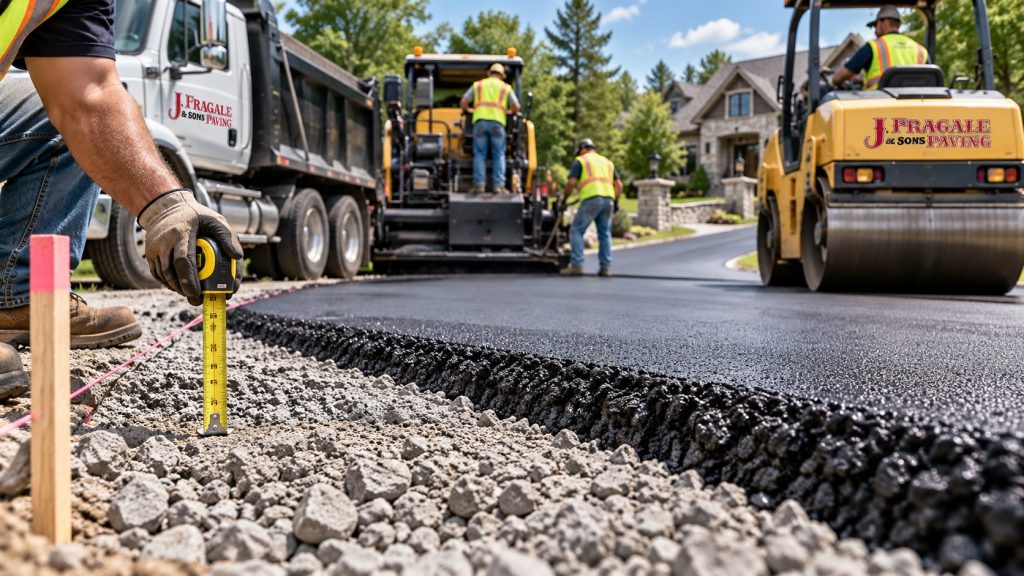
Most lightly traveled private roads start with approximately 3 to 4 inches of compacted asphalt over 8 to 12 inches of properly compacted aggregate base. Roads regularly carrying garbage trucks, delivery vehicles, or heavy equipment may need 4 to 6 inches or more of asphalt, with a stronger foundation. The correct private road asphalt thickness depends on traffic loads, soil strength, drainage, and local requirements. These ranges are preliminary planning guidance, not a substitute for pavement design.
Why Private Road Asphalt Thickness Matters
A private road experiences different demands than a typical residential driveway.
Multiple households, delivery vehicles, emergency responders, and seasonal maintenance equipment can place repeated stress on the same pavement.
At J. Fragale & Sons Paving, we evaluate the complete pavement structure before recommending asphalt thickness.
Our goal is to provide a stable driving surface that resists cracking, rutting, settlement, and premature deterioration.
The asphalt surface matters, but the foundation underneath is equally important.
Recommended Asphalt Thickness for Private Roads
The right thickness depends primarily on vehicle loads and how frequently the road is used.
| Private Road Application | Asphalt Thickness | Aggregate Base Thickness |
|---|---|---|
| Light residential access road | 3 to 4 inches | 8 to 12 inches |
| Shared residential road with service trucks | 4 to 6 inches | 10 to 12+ inches |
| Frequent heavy-truck access | Engineered pavement design | Engineered base depth |
All measurements represent compacted thicknesses. Actual pavement sections must account for site conditions and anticipated traffic.
Light-Traffic Private Roads
A private road serving a small number of homes may function well with 3 to 4 inches of compacted asphalt over a properly prepared base.
However, occasional heavy vehicles must still be considered.
A road that primarily carries passenger cars may also need to support fire trucks, moving trucks, or construction equipment.
Heavy-Traffic Private Roads
Shared access roads serving commercial properties, multiple residences, or frequent service vehicles generally need greater structural capacity.
We recommend evaluating axle loads rather than simply counting daily vehicles.
A few fully loaded trucks can create substantially more pavement stress than numerous passenger cars.
For these projects, professional pavement design helps determine whether additional asphalt, aggregate, or subgrade stabilization is necessary.
How Thick Should the Road Base Be?
Road base thickness is one of the most important decisions in asphalt road construction.
A properly compacted aggregate base distributes vehicle loads and helps prevent movement beneath the pavement.
For many private roads, 8 to 12 inches of compacted crushed aggregate provides a useful preliminary planning range. Weak soils or heavy loads may require additional thickness.
At J. Fragale & Sons Paving, our approach emphasizes substantial foundation preparation. Our standard residential preparation guidance recommends 12 inches of processed gravel.
Why Base Preparation Matters
Without adequate support, even thick asphalt can develop:
- Alligator cracking
- Deep wheel-path ruts
- Settlement and depressions
- Potholes and edge failure
- Frost-related pavement movement
We remove unsuitable materials, address soft areas, establish proper grades, and compact the aggregate before paving begins.
Explore our paving preparation services to understand how a strong foundation supports long-term pavement performance.
What Factors Determine Asphalt Road Thickness?
1. Soil Strength and Stability
Stable, well-draining soils generally provide better support than saturated clay, organic material, or uncompacted fill.
Weak subgrade conditions may require excavation, stabilization, separation fabric, or additional aggregate.
2. Traffic Volume and Vehicle Weight
Passenger vehicles produce relatively modest pavement loads compared with heavy commercial vehicles.
Private roads frequently used by delivery trucks, garbage trucks, or emergency vehicles require special consideration.
3. Drainage and Connecticut Winters
Connecticut’s freeze-thaw cycles create challenges for asphalt pavement.
Water entering the base can weaken support, contribute to frost heaving, and accelerate cracking.
We focus on proper grading, drainage outlets, and stable aggregate layers to reduce these risks.
4. Asphalt Compaction and Layer Thickness
Asphalt thickness should always be specified after compaction.
Larger projects may require multiple asphalt lifts, with a structural binder course beneath the finished surface.
The Asphalt Institute’s engineering guidance explains that minimum lift thickness should generally be at least three times the nominal maximum aggregate size to support proper compaction.
Correct material selection and rolling procedures are essential to pavement performance.
Private Road Asphalt Construction: Step-by-Step
A successful private road requires more than spreading asphalt over existing gravel.
Our general construction process includes:
- Site Evaluation: Assess traffic requirements, drainage, slopes, and existing ground conditions.
- Excavation: Remove unsuitable soil, vegetation, and unstable materials.
- Subgrade Preparation: Grade and compact the underlying soil.
- Aggregate Base Installation: Place and compact processed gravel or crushed stone to the specified thickness.
- Asphalt Placement: Install the appropriate asphalt mixture in properly compacted lifts.
- Final Inspection: Verify pavement thickness, grading, surface quality, and drainage.
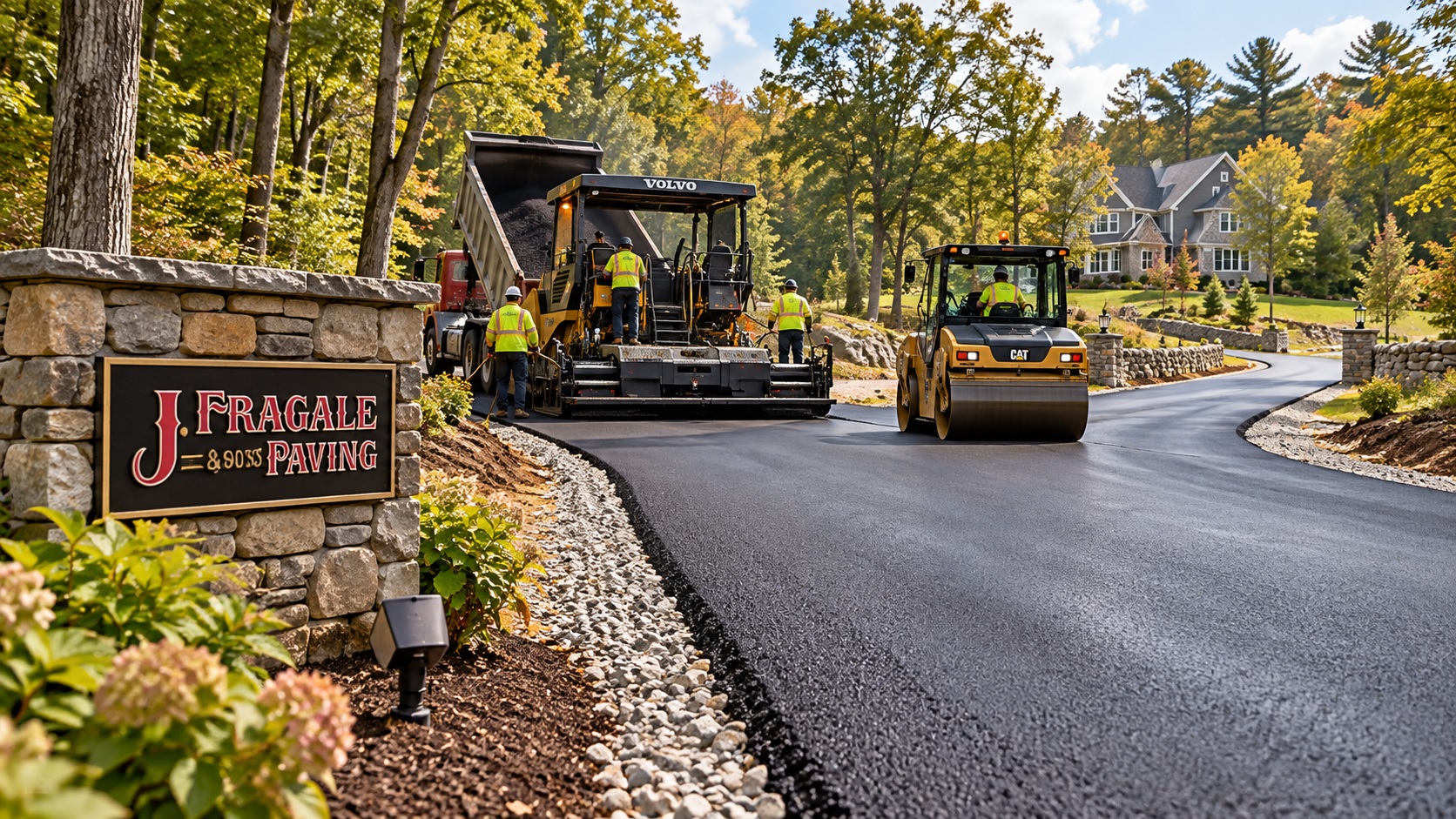
Our asphalt paving services cover private roads, residential driveways, commercial properties, and municipal paving projects throughout Northwest Connecticut.
Frequently Asked Questions
Is 2 inches of asphalt enough for a private road?
Two inches is generally too thin as a complete asphalt pavement section for most private roads, particularly where heavy service vehicles travel. The road may require additional asphalt and aggregate support.
Is 4 inches of asphalt enough for a private road?
Four inches may be appropriate for some residential private roads with a stable foundation and properly designed base. Heavier traffic or weak soil may require more thickness.
Can asphalt be installed directly over gravel?
Yes, provided the gravel meets the necessary structural, grading, drainage, and compaction requirements. Loose or unstable gravel must be corrected before paving.
How long does a private asphalt road last?
A properly constructed asphalt road can serve for many years, but its lifespan depends on traffic loads, drainage, foundation stability, climate, and maintenance.
Build a Stronger Private Road With J. Fragale & Sons Paving
Choosing the correct private road asphalt thickness protects your paving investment.
At J. Fragale & Sons Paving, we evaluate traffic demands, road base conditions, drainage, and site preparation before recommending a suitable pavement structure.
Whether you’re building a new access road or replacing deteriorated pavement, our team provides professional asphalt road construction throughout Torrington and Northwest Connecticut.
Planning a private road paving project? Contact J. Fragale & Sons Paving at (860) 482-5505 to schedule a site evaluation and request a free estimate.