
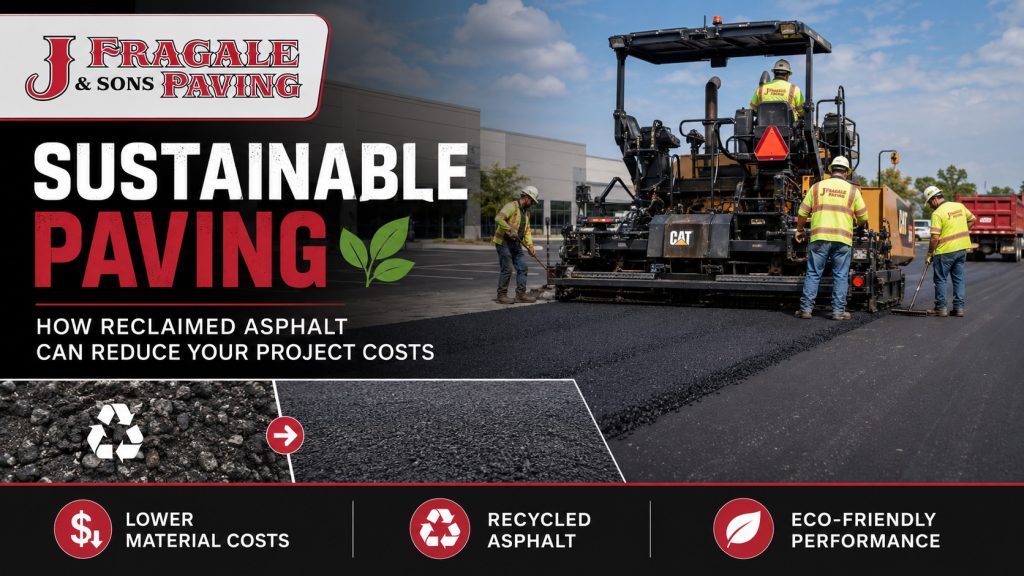
Reclaimed asphalt pavement, often called RAP, can reduce paving costs because it reuses milled asphalt from old pavement as part of a new asphalt mix or base material. This can lower the need for virgin aggregate, reduce binder demand, cut disposal needs, and support greener paving practices. FHWA promotes RAP because it can deliver strong economic, environmental, and engineering benefits in pavement recycling.
Why Reclaimed Asphalt Matters for Modern CT Paving
A paving project does not have to choose between durability and sustainability. With the right contractor, recycled asphalt can be part of a smart, cost-conscious project plan.
At J. Fragale & Sons Paving, our work across Torrington, Litchfield County, and Northwest Connecticut covers excavation, grading, asphalt paving, asphalt maintenance, stone and gravel drives, and private roads. That matters because sustainable asphalt paving starts before the blacktop is placed. A long-lasting surface depends on the base, drainage, compaction, material choice, and project goal.
What Is Reclaimed Asphalt Pavement?
Reclaimed asphalt pavement is asphalt that has been removed, milled, crushed, screened, and reused. Instead of hauling old pavement away as waste, RAP gives that material a second use in new paving mixes, road base, driveway base, shoulders, private roads, and commercial lot work.
FHWA states that recycled materials should be used to the maximum economical and practical extent possible when they can provide equal or improved performance. That is the key point. Recycled asphalt is not about cutting corners. It is about using proven material responsibly.
Recycled Asphalt vs New Asphalt
The recycled asphalt vs new asphalt question depends on the job. New asphalt uses virgin aggregate and binder. Reclaimed asphalt reuses existing aggregate and aged binder from old pavement.
| Option | Best Use | Main Benefit |
|---|---|---|
| New asphalt | Final surface courses, high-visibility driveways, heavy-traffic lots | Clean finish and controlled mix design |
| Reclaimed asphalt | Base layers, private roads, farm roads, budget-conscious surfaces | Lower material waste and potential cost savings |
| Blended asphalt mix | Commercial lots, roadways, overlays | Balances performance, cost, and sustainability |
For parking lots and driveways, the right answer depends on traffic load, existing pavement condition, drainage, and whether the project needs a finished surface or a strong base layer.
How RAP Can Reduce Project Costs
Reclaimed asphalt can support cost-effective commercial paving in several ways.
First, it reduces the need for virgin stone and asphalt binder. FHWA notes that the primary reasons for using RAP are economic savings and environmental benefits. Second, it can reduce hauling and disposal costs because existing asphalt can often be reused instead of treated as debris. Third, it helps stretch project budgets on larger areas such as commercial parking lots, private roads, farm lanes, and industrial yard surfaces.
For a business owner planning commercial parking lot paving, material strategy can affect the total project cost. A good plan may use reclaimed material in the base or intermediate layer while reserving fresh asphalt for the finished wearing course.
Environmental Benefits of Green Paving Solutions
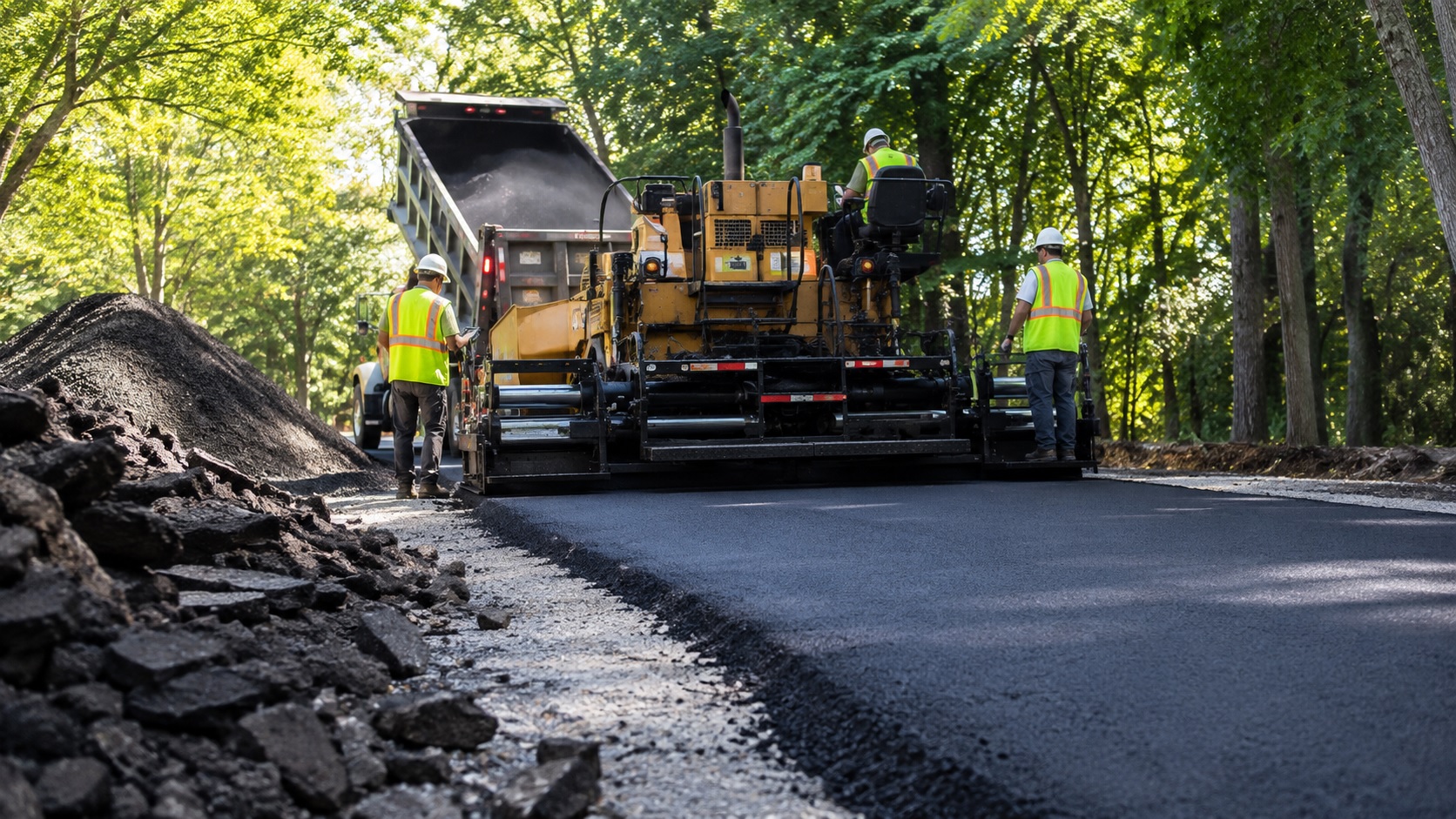
Green paving solutions are not just marketing language. Asphalt recycling helps reduce landfill demand, conserve raw materials, and lower the need for new aggregate extraction. FHWA lists benefits of recycling that include cost savings potential, life cycle performance, landfill reduction, and environmental stewardship.
The asphalt industry also reuses large volumes of RAP. NAPA reported that 96.1 million tons of reclaimed asphalt pavement avoided 2.9 million metric tons of CO₂e, comparable to emissions from 620,000 cars.
That makes RAP one of the most practical sustainable asphalt paving tools available for property owners who want a better project footprint without sacrificing function.
When Reclaimed Asphalt Makes the Most Sense
Reclaimed asphalt is especially useful for:
- Commercial parking lot base layers
- Private roads and shared drives
- Farm roads and utility access lanes
- Large resurfacing projects
- Temporary construction access
- Budget-conscious pavement rehabilitation
- Projects where old asphalt can be milled and reused
It may not be the best choice as the final surface for every residential driveway. For curb appeal, smoothness, and long-term weather resistance, a fresh surface course may still be the better finish. The strongest projects often combine both: recycled material where it performs well and new asphalt where appearance and surface durability matter most.
The Base Still Matters Most
Reclaimed asphalt cannot fix poor site preparation. A pavement built on weak, wet, or poorly compacted ground will still crack, settle, or rut. Our approach starts below the surface with grading, drainage, base preparation, and compaction.
Sinking driveways often fail because the base is weak, wet, thin, poorly compacted, or poorly drained. That is why sustainable paving has to be engineered, not guessed.
Sustainable Can Also Be Practical
Reclaimed asphalt helps property owners lower waste, conserve materials, and control project costs. Used correctly, RAP can support strong bases, practical private roads, commercial parking lots, and responsible pavement rehabilitation.
At J. Fragale & Sons Paving, our goal is to build pavement that makes sense for the property, the budget, and Connecticut conditions. Whether the project calls for fresh asphalt, reclaimed material, or a blended strategy, our team can help plan the right paving solution from excavation to finish.