

A gravel driveway can look timeless on a Connecticut home, especially on long private lanes, rural properties, wooded lots, and classic New England homes. But a durable gravel driveway is not made by dumping stone from a truck and spreading it flat. The strongest driveways are built in layers, compacted in stages, and graded so water drains before it destroys the base.
J. Fragale & Sons Paving builds stone and gravel driveways, private roads, asphalt driveways, parking lots, roadways, and site preparation projects across Torrington, CT and surrounding Northwest Connecticut communities. Our team provides excavation, grading, prep, paving, asphalt maintenance, stone, gravel, and private roads, giving homeowners one team for the full driveway structure.
What Makes a Gravel Driveway Low-Maintenance?
A low-maintenance gravel driveway starts with proper excavation, a compacted base, a stabilizing middle layer, and the right surface stone. The Federal Highway Administration defines gravel as a mix of stone, sand, and fine-sized particles used as sub-base, base, or surfacing on roads. That mix matters because angular stone creates strength while fines help the surface knit together.
For homeowners searching for gravel driveway contractors CT, the key question is not just “what stone looks best?” The better question is “what stone structure will hold up under delivery trucks, snow plows, rain, and freeze-thaw cycles?”
Why Gravel Driveways Fail
Most failures start below the top layer. Soft soil, trapped water, shallow stone, poor compaction, and rounded surface gravel all cause movement. Once tires start pushing loose stone sideways, the driveway develops ruts, potholes, washouts, and messy tracking onto the street.
Preparation is critical because asphalt is only as strong as the base underneath it, and the same logic applies to gravel. Weak or uneven base work causes failure, while a quality gravel base improves long-term performance.
The 3-Layer Gravel Driveway System
1. Structural Base Layer: 2-to-3-Inch Crushed Stone
The bottom layer carries the weight. This is where coarse 2-to-3-inch crushed stone is useful because large angular pieces spread the load over the subgrade. For long rural drives and private lanes, this base layer helps resist sinking when oil trucks, delivery vans, trailers, and service vehicles use the driveway.
Before this layer goes down, the driveway path should be excavated and graded. Organic topsoil should be removed because it holds moisture and compresses. A strong gravel driveway begins with stable subgrade, not a thin stone cover over lawn soil.
2. Middle Stabilizing Layer: Smaller Crushed Aggregate
The middle layer bridges the coarse base and the finished driving surface. It fills gaps, tightens the structure, and helps lock the driveway together. This layer may use smaller crushed stone or processed gravel depending on the site, drainage, slope, and future paving plans.
Stone and gravel driveways can be built so they also serve as a strong base for future asphalt paving, reducing prep work later when homeowners decide to pave.
3. Surface Layer: 3/4-Inch Aggregate With Stone Dust
The best stone for driveway surface use is usually not round pea gravel. Round stone rolls under tires and tracks out easily. A better driveway surface uses angular 3/4-inch crushed aggregate mixed with stone dust, such as processed gravel or a local CT-style blue stone blend. Crushed stone with stone dust is highly compactable and is commonly used for construction bases, including driveways.
This top layer packs into a firm driving surface. The stone dust fills voids between aggregate pieces, helping the driveway resist tire spin, rutting, and washboarding.
Why Proper Grading Matters for Private Roads
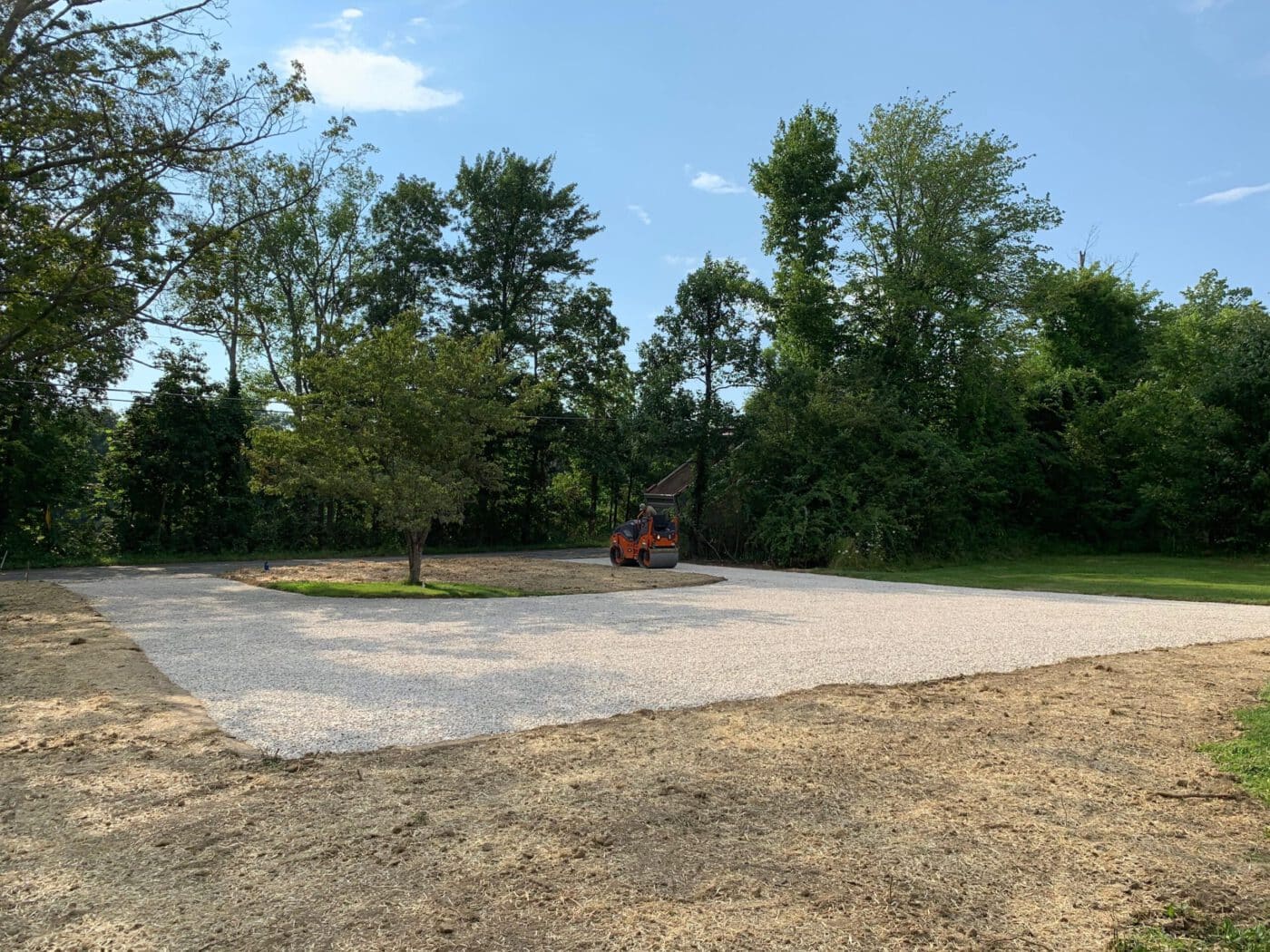
Private road paving Torrington CT projects often begin with gravel, even when asphalt may come later. The reason is simple: long lanes need shape before surface. A proper gravel driveway or private road should be graded to shed water off the travel path, not trap it in the wheel lanes.
For rural driveways, this usually means:
- A crowned or pitched profile
- Clean edges that do not trap water
- Compacted layers, not one thick loose dump
- Drainage planning near low spots
- Surface stone that packs tightly
- A transition apron that limits stone tracking onto town roads
Tracking stone onto municipal roads is more than a nuisance. It creates cleanup issues, rough transitions, and possible safety concerns. A compacted 3/4-inch processed surface with fines holds together far better than loose decorative stone.
Bulk Stone Driveway vs Asphalt Driveway
A gravel driveway is ideal when the homeowner wants a natural look, lower upfront cost, and a surface that fits a wooded or country setting. Asphalt is better when the goal is a smooth, sealed, snow-plow-friendly surface with less loose material movement.
J. Fragale & Sons Paving offers both options, including asphalt paving, prep for paving, stone and gravel driveways, excavation, and driveway repair. We provide services to residential, commercial, and municipal paving projects, including driveways, parking lots, roadways, sidewalks, stone drives, and private roads.
Gravel Is a Built System, Not a Dumped Material
The strongest gravel driveway is built like a road. It needs excavation, structural stone, stabilizing aggregate, compacted surface material, and controlled drainage. The surface should look natural, but the base should work like engineered infrastructure.
For homeowners comparing gravel driveway contractors CT, J. Fragale & Sons Paving brings the excavation equipment, grading experience, stone knowledge, and paving background needed to build a durable gravel driveway or private lane in Torrington and surrounding Connecticut towns.