
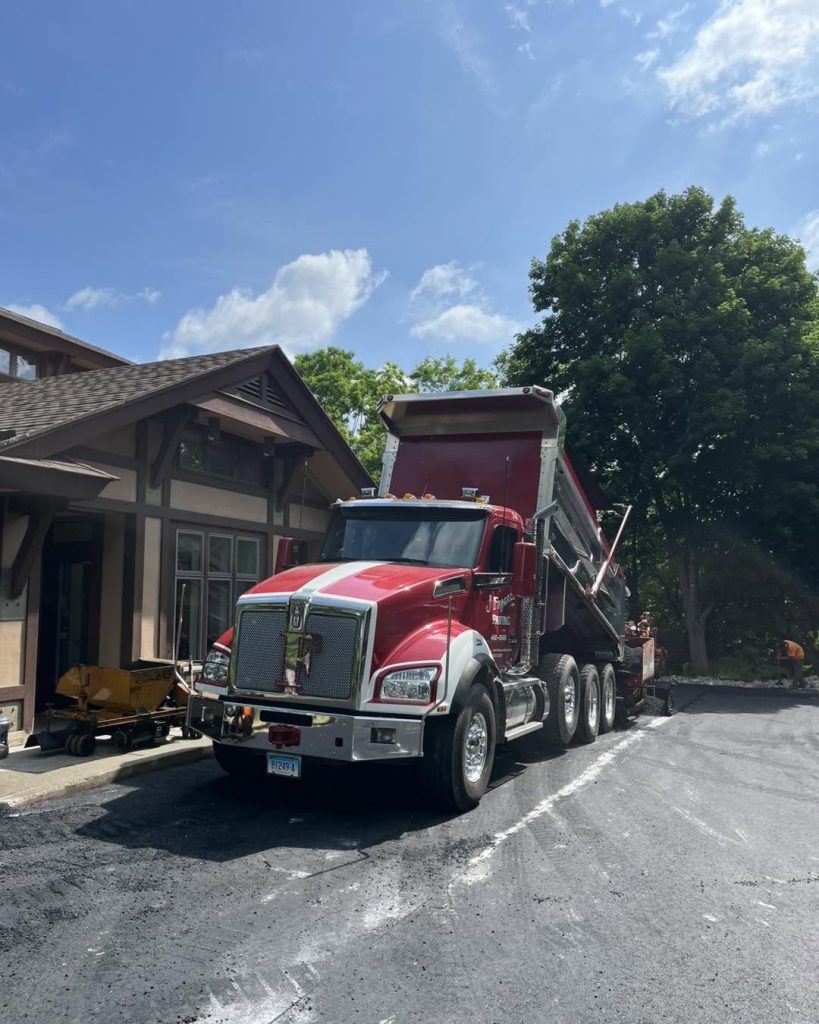
For homeowners, property managers, and commercial site owners across Torrington, Litchfield, Avon, Simsbury, Bristol, Harwinton, Watertown, and Northwest Connecticut, choosing between resurfacing and replacement can change the entire paving budget. At J. Fragale & Sons Paving, our team helps customers decide whether asphalt resurfacing vs replacement makes sense based on the condition of the surface, the base, drainage, and long-term traffic use.
A driveway or parking lot may look rough, but that does not always mean it needs full excavation. In other cases, a fresh overlay would only cover a deeper failure for a short time. The key is knowing which signs point to surface wear and which signs point to structural breakdown.
The Simple Rule: Surface Wear Can Be Resurfaced, Base Failure Must Be Rebuilt
Asphalt works as a system. The blacktop layer takes traffic, weather, and sunlight, while the stone base underneath supports the load. If the base is still stable, resurfacing or maintenance may extend the surface life. If the base is moving, sinking, holding water, or breaking apart, replacement is usually the smarter investment.
That is why driveway repair CT projects should begin with an inspection, not a guess.
When Resurfacing May Be the Right Choice
Resurfacing, also called an overlay, adds a new layer of asphalt over an existing paved surface. It works best when the driveway or parking lot has cosmetic or moderate surface damage but still has a solid foundation.
Resurfacing may be a good fit when there are:
- Faded or oxidized asphalt surfaces
- Small isolated cracks
- Minor raveling or rough texture
- Shallow surface wear
- Good drainage
- No major sinking
- No widespread alligator cracking
- A stable base underneath
For surfaces that only need protection, asphalt maintenance options such as seal coating, armor coating, crack filling, patches, and repairs may help preserve the pavement before heavier work is needed.
When Patching Is Enough
Driveway patching vs repaving depends on how isolated the damage is. A small pothole, edge break, or cracked section may be repairable without resurfacing the entire driveway.
Patching can work when the surrounding asphalt is still strong and the damaged area is limited. However, if patches keep failing in the same spot, water or base movement may be the real cause.
The Alligator Cracking Rule
Alligator cracking is the clearest warning sign that a simple overlay may not be enough. It looks like a web of small connected cracks, similar to reptile skin. This pattern usually means the pavement is flexing because the base below is weak, wet, or unstable.
The rule is simple:
If cracks are isolated and straight, maintenance or resurfacing may help.
If cracks form an alligator pattern, the base needs attention.
Covering alligator cracking with a new asphalt layer can make the driveway look better for a short time, but the cracks usually reflect through again because the structural problem remains below.
When Full Driveway Replacement Is the Better Investment
Homeowners often ask when to replace asphalt driveway surfaces instead of resurfacing. Full replacement is the stronger choice when the driveway has deep structural failure, poor drainage, severe cracking, or repeated sinking.
A tear-out may be needed when there are:
- Widespread alligator cracking
- Large potholes
- Deep ruts from vehicles
- Soft or pumping areas
- Standing water
- Failed edges
- Multiple uneven sections
- Repeated patch failure
- Frost heave damage
- Poor original base preparation
A proper replacement includes removal of failed asphalt, correction of the base, grading, compaction, drainage planning, and new paving.
Why Drainage Decides the Lifespan
Water is one of the biggest reasons asphalt fails early in Connecticut. When cracks allow water into the base, freeze-thaw cycles can lift, sink, and break the pavement. A resurfacing project without drainage correction may only delay the same failure.
Before choosing resurfacing, check where water goes during rain. If water sits on the surface, runs toward the garage, pools at the edge, or drains under the driveway, grading or base correction may be needed.
For deeper base concerns, read J. Fragale & Sons Paving’s guide on sinking driveway repair.
Quick Decision Guide
| Pavement Condition | Best Option |
|---|---|
| Fading, dry surface, light cracking | Seal coating or armor coating |
| Small isolated cracks | Crack filling |
| One damaged area | Patching |
| Stable surface with moderate wear | Resurfacing |
| Alligator cracking | Tear-out and base repair |
| Sinking, rutting, drainage failure | Full replacement |
| Commercial lot with repeated failures | Structural evaluation and repaving |
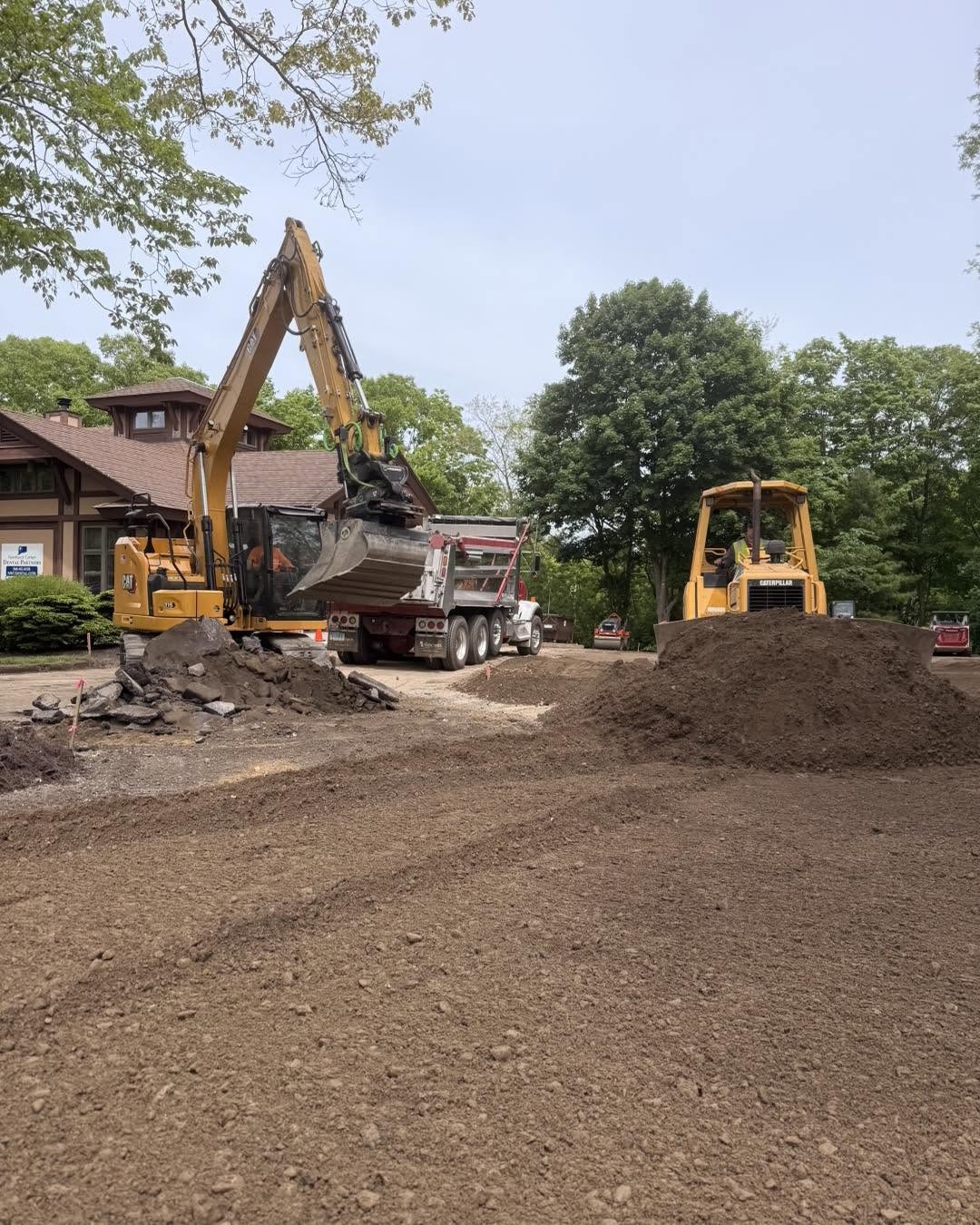
Get the Right Repair Before Spending More Than Needed
Not every worn driveway needs a full tear-out, but not every driveway should be resurfaced either. The right choice depends on cracks, drainage, base stability, age, and traffic use.
J. Fragale & Sons Paving helps Connecticut homeowners, property managers, and commercial owners choose the right path for asphalt resurfacing vs replacement. From asphalt paving and commercial parking lot paving to repair, maintenance, excavation, and prep work, our team builds pavement from the base up.
Visit J. Fragale & Sons Paving to schedule a driveway or parking lot evaluation.
FAQ
What is the difference between asphalt resurfacing vs replacement?
Resurfacing adds new asphalt over an existing stable surface. Replacement removes failed asphalt, corrects the base, and installs new pavement.
When should an asphalt driveway be replaced?
A driveway should usually be replaced when it has widespread alligator cracking, sinking, deep ruts, drainage problems, or repeated patch failure.
Is driveway patching better than repaving?
Patching is better for isolated damage. Repaving or replacement is better when the damage covers a large area or comes from base failure.
Can alligator cracking be resurfaced?
Usually not as a long-term fix. Alligator cracking often points to structural failure under the asphalt, so the damaged section should be evaluated and rebuilt.