

A driveway can look perfect from the curb and still fail at the seams. The most vulnerable areas are often the places where asphalt meets another hard surface: a concrete driveway apron, garage slab, walkway, cobblestone edge, Belgium block border, trench drain, or existing pavement.
Those transition points matter because asphalt, concrete, and stone do not move the same way. Each surface reacts differently to water, traffic, heat, freezing weather, and settlement. When grading is rushed or edges are not compacted by hand, water starts working into the seam. Once that water freezes and thaws, small gaps can become cracks, heaving, edge separation, and curb appeal problems.
At J. Fragale & Sons Paving, our work starts before the asphalt is placed. We provide excavation, grading, paving, asphalt maintenance, stone and gravel drives, and related paving services for Connecticut homeowners, with a focus on proper preparation before the finished surface goes down.
Why Driveway Transitions Fail First
A driveway transition is any point where one surface meets another. On residential projects, that usually means:
- Asphalt to concrete garage slab
- Asphalt to concrete driveway apron
- Asphalt to sidewalk
- Asphalt to road edge
- Asphalt to Belgium block
- Asphalt to stone border
- Asphalt to paver walkway
- New asphalt to existing blacktop
These areas fail first because they collect stress. Vehicle tires turn at garage entries. Snowplows catch raised lips. Water runs toward low seams. Expansion and contraction open tiny gaps between materials. Once the edge starts moving, the asphalt loses support.
That is why seamless driveway transitions require more than a smooth top layer. They require proper excavation, base compaction, edge restraint, pitch control, and hand finishing.
Water Runs Along the Seam, Not Into It
The best driveway transition is not just flush. It is shaped so water moves parallel to the seam or away from the structure.
When water is directed into the joint between asphalt and concrete, the seam becomes a weak spot. Moisture settles into the edge, freezes, expands, and pushes materials apart. Fragale’s commercial paving guidance explains that poor base preparation can lead to asphalt cracking, and freeze-thaw cycles can continue growing those cracks over time.
That same principle applies to residential seams. The cleaner the pitch and the stronger the compacted base, the longer the transition can hold its shape.
Concrete Driveway Apron Transitions
A concrete driveway apron is often the meeting point between a private driveway and the street or sidewalk area. This transition has to handle vehicle weight, street runoff, curb height, municipal requirements, and winter conditions.
A good asphalt-to-apron transition should be:
- Flush enough to avoid tire impact
- Pitched to move water away from the joint
- Supported by compacted base material
- Tight against the concrete edge
- Hand-finished for a clean line
- Thick enough to resist edge cracking
If the asphalt is left too high, tires bump over the edge and plows can catch it. If asphalt is too low, water collects against the concrete and the edge starts to break down. The right elevation has to be built through grading, not guessed during the final pass.
For homeowners planning a full driveway improvement, our asphalt driveway repair services help address cracks, potholes, fading, blacktop repair, and related surface concerns before they become larger issues. J. Fragale & Sons Paving describes these services as driveway crack filling, blacktop repair, tar repair, and complete asphalt driveway repair across CT.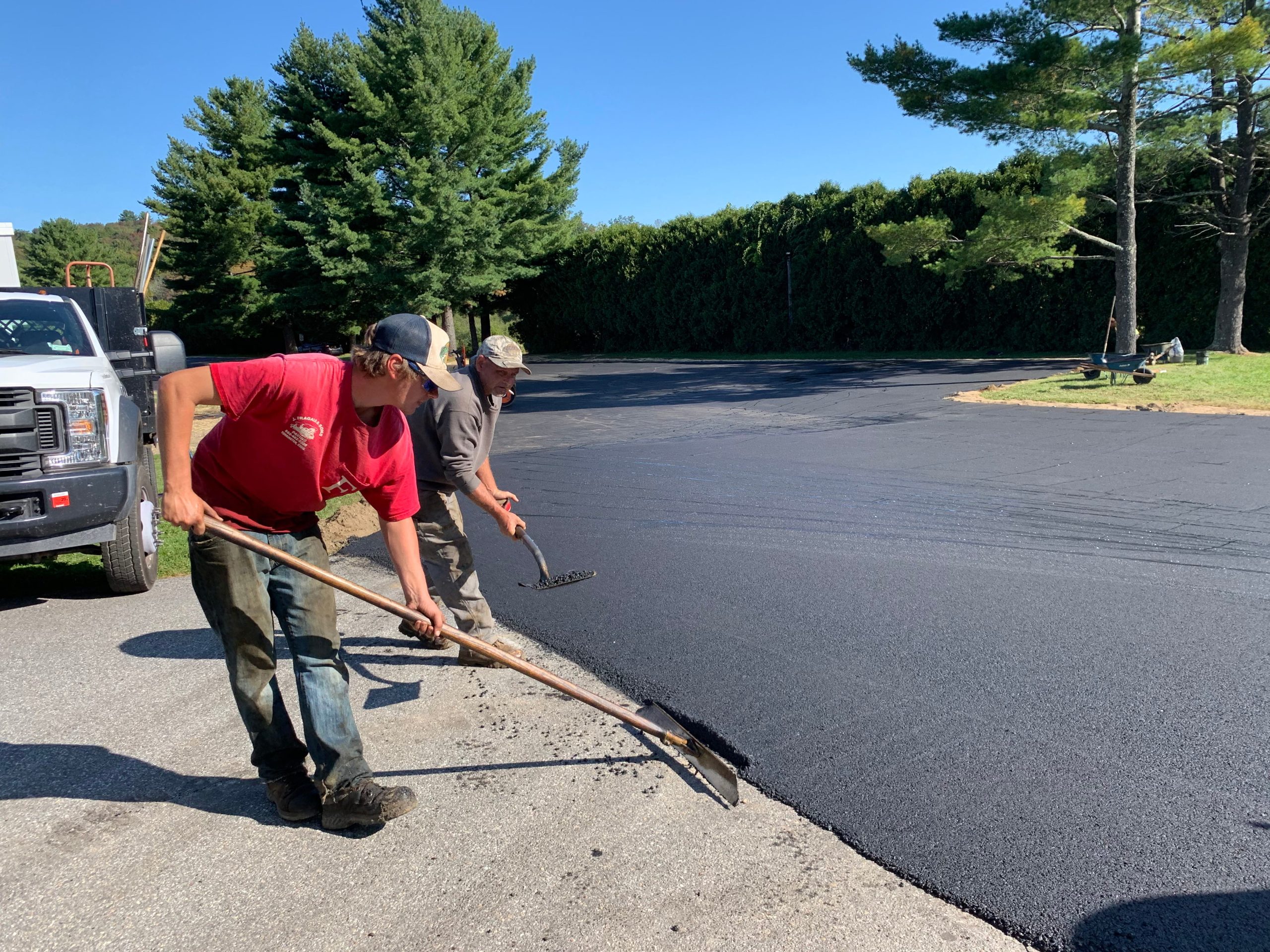
Garage Thresholds Need Precision
The garage threshold is one of the most important transition points on the whole driveway. A garage slab is fixed. Asphalt is flexible. If the grade is wrong, water can run toward the garage, sit at the door seal, or seep along the slab edge.
A proper garage transition requires careful elevation control.
Our crew looks at:
- Garage slab height
- Door seal clearance
- Existing water flow
- Driveway slope
- Base depth near the slab
- Asphalt thickness near the threshold
- Compaction at the edge
- Hand-tamping against the concrete
The asphalt should meet the garage slab smoothly without creating a raised lip or a low trough. The finished surface should help water move away from the garage and across the driveway path instead of into the structure.
Why Hand-Tamping Matters at Edges
Large rollers do excellent work on open driveway areas, but they cannot always compact tightly against concrete, stone, walls, garage slabs, stairs, or Belgium block. That is where hand-tamping and smaller compaction tools become important.
Hand-tamping helps tighten asphalt at detailed areas such as:
- Garage doors
- Apron seams
- Stone borders
- Walkway connections
- Drainage edges
- Narrow corners
- Curved hardscape lines
- Existing pavement tie-ins
Without edge compaction, the transition can look good on day one but loosen faster under tires and weather. A hand-finished edge creates a denser seam, cleaner shape, and stronger bond against the adjacent material.
Belgium Block and Stone Border Transitions
Belgium block adds structure and curb appeal, but it also creates a hard vertical edge. If asphalt is not graded and compacted properly against the stone, water can collect at the border or the edge can crumble.
A strong Belgium block transition should include:
- Solid base under the asphalt
- Stable edge restraint
- Flush elevation where needed
- Clean compaction against the stone
- Pitch that keeps water moving
- No low channel along the border
- No thin feathered asphalt edge
When asphalt and stone are planned together, the final driveway looks cleaner and performs better.
Custom Hardscape Installation Starts Below Grade
Custom hardscape installation is not only about the visible stone, border, or apron. The base below it controls whether the finished surface stays flush.
A weak base can cause:
- Settlement near the garage
- Apron separation
- Dips at the road edge
- Asphalt cracking beside stone
- Water pooling along borders
- Frost heave at the seam
- Broken edges after plowing
Fragale’s gravel driveway guidance notes that a good foundation helps prevent shifting and sinking, and recommends compacting the base layer with a tamper or plate compactor. That same foundation-first mindset applies to asphalt transitions.
How Precision Grading Shapes the Final Result
Grading is the difference between a driveway that only looks flat and one that drains correctly.
Before paving, our crew reviews how water should move across the driveway. The goal is to prevent water from sitting near the garage, apron, foundation, stone edging, or walkway. On many projects, a slight cross pitch or carefully shaped crown helps guide water toward safe runoff areas.
Fragale’s driveway installation guidance notes that ground should be leveled and sloped away from the home to allow drainage, with an optimum slope of about 1 to 2 percent.
That may sound small, but even a subtle grade can make a major difference in how a driveway handles rain, snowmelt, and freeze-thaw cycles.
Asphalt Driveway Repair Around Failed Transitions
Not every project needs full replacement. Sometimes the main issue is concentrated around a failed transition.
Asphalt driveway repair may be the right fit when there are:
- Cracks along the concrete apron
- Potholes near the garage
- Settlement beside Belgium block
- Broken asphalt at a walkway
- Low spots collecting water
- Edge raveling along stone borders
- Old patchwork separating from new material
The repair plan depends on what caused the failure. A surface patch may not last if the base below is unstable. A better repair often means cutting out the weak section, correcting the base, regrading the area, then compacting and finishing the new asphalt edge properly.
Why Freeze-Thaw Separation Ruins Curb Appeal
Connecticut driveways have to handle winter. A small seam gap can become a larger problem when water enters, freezes, expands, and pushes the asphalt away from the adjacent surface.
Over time, this can create:
- Raised edges
- Cracked seams
- Open gaps
- Loose asphalt
- Potholes
- Water pooling
- Uneven transitions
- A driveway that looks older than it is
The best protection is not a quick cosmetic fix. It is a properly built transition with strong base support, compacted asphalt, thoughtful drainage, and tight finishing around fixed surfaces.
What Homeowners Should Ask Before Hiring a Paving Contractor
Before choosing a paving company, ask how transitions will be handled. A good estimate should explain more than total square footage.
Ask questions like:
- How will the driveway meet the garage slab?
- Will the apron transition be flush?
- How will water move away from the seam?
- Will edges near stone or concrete be hand-tamped?
- What base preparation is included?
- Will weak asphalt near the seam be removed?
- How will low spots be corrected?
- Are drainage concerns included in the plan?
- Will the crew review elevation before paving?

The Fragale Approach to Seamless Driveway Transitions
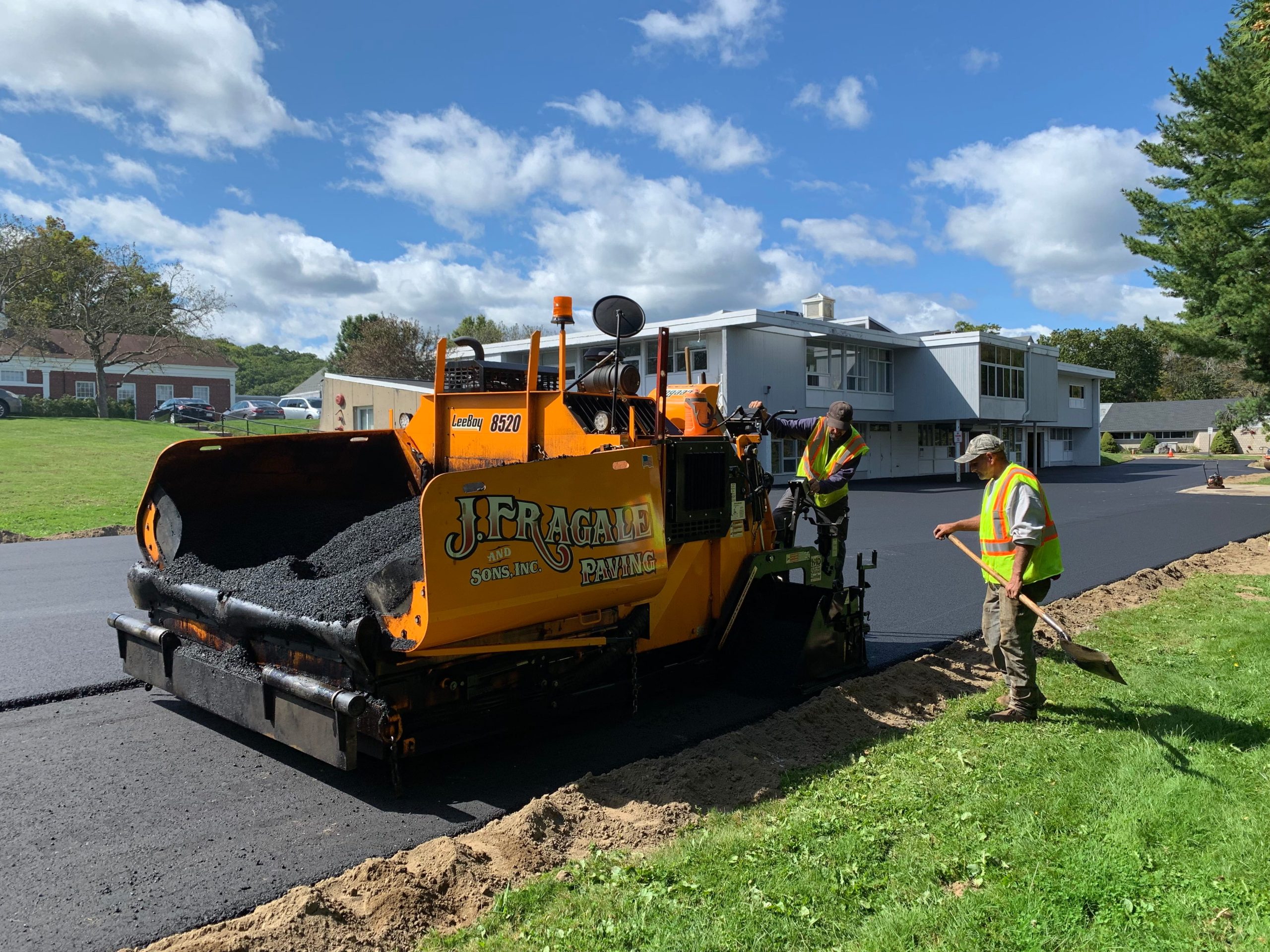
Our approach is simple: build the transition before the final surface is placed.
That means paying attention to:
- Excavation depth
- Base condition
- Drainage direction
- Existing concrete height
- Garage threshold clearance
- Stone border elevation
- Asphalt thickness
- Hand compaction
- Roller access
- Final edge shape
A seamless driveway transition should feel smooth under the tires, look clean from the curb, and move water where it belongs. That level of detail comes from preparation, not shortcuts.
Local Driveway Transition Work Across CT
Driveways across Torrington, Avon, Bristol, Harwinton, Litchfield, Burlington, Farmington, and surrounding Connecticut towns often have challenging transition points. Older concrete aprons, settled garage slabs, stone borders, sloped lots, and freeze-thaw wear can all affect the final paving plan.
For homeowners comparing local paving services, the best result comes from a contractor that understands excavation, prep, asphalt, repair, and hardscape edges as one connected system.
Great Driveways Are Won at the Seams
The transition is where a driveway proves the quality of the installation. If the asphalt meets concrete, stone, or the garage slab poorly, water and winter weather will find the weak point.
A flawless transition needs the right grade, the right base, the right compaction, and hand-finished attention around fixed surfaces. That is how asphalt meets concrete aprons, garage thresholds, and Belgium block flush without creating the separation that ruins curb appeal.
At J. Fragale & Sons Paving, our team helps Connecticut homeowners plan smarter driveway installations and repairs with clean transitions, proper drainage, and long-lasting pavement performance.
FAQs
Why does asphalt separate from a concrete driveway apron?
Asphalt can separate from a concrete driveway apron when water enters the seam, the base settles, compaction is weak, or freeze-thaw cycles push the surfaces apart. Proper grading and edge compaction help reduce this risk.
Should asphalt be flush with a garage floor?
Asphalt should meet the garage threshold smoothly while still allowing water to drain away from the garage. The goal is a clean transition without a raised lip or low trough at the door.
How does hand-tamping improve driveway edges?
Hand-tamping tightens asphalt where large rollers cannot reach, such as against concrete, garage slabs, stone borders, and Belgium block. This creates a denser, cleaner, stronger edge.
Can asphalt driveway repair fix a failed transition?
Yes, but the repair should address the cause of the failure. If the base has settled or water is draining into the seam, the weak area may need to be cut out, regraded, compacted, and repaved.
What makes a seamless driveway transition last longer?
A lasting transition needs proper excavation, strong base compaction, accurate grading, correct asphalt thickness, hand-finished edges, and drainage that moves water away from the seam.