
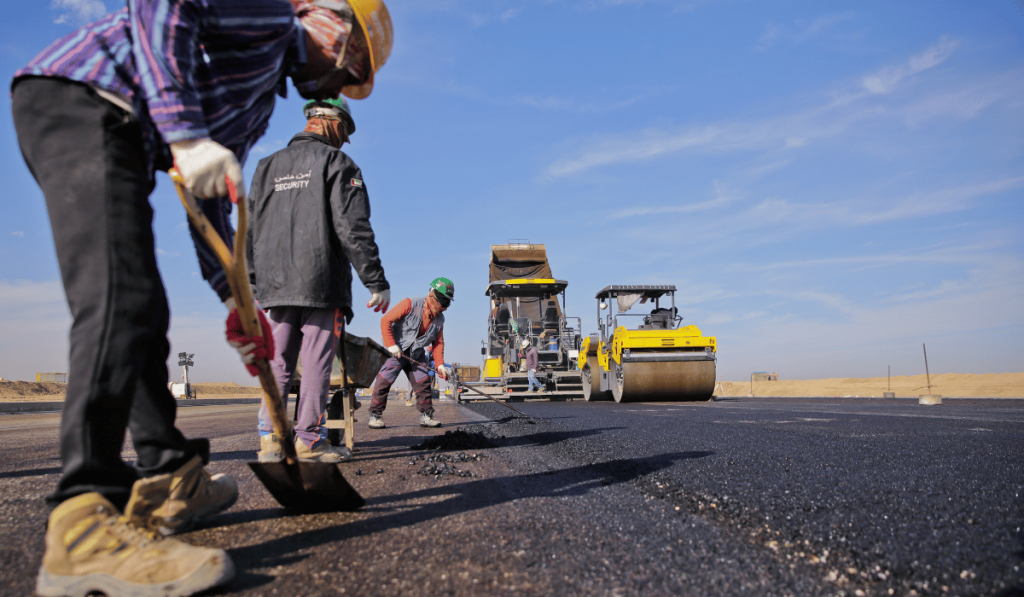
When planning a paving project, calculating the amount of asphalt you will require is one of the most important things to do. The amount of asphalt tonnage is critical when deciding how much asphalt to order and how much your project will cost. Mistakes in calculations may result in over-ordering and unnecessary expenses, or under-ordering with delays and lack of coverage. In this guide, we will discuss how to calculate asphalt tonnage in a simple and understandable manner.
What is Asphalt Tonnage?
Asphalt tonnage is the amount of asphalt needed in a given paving job. It is calculated in tons and depends on the surface to be paved, the thickness of the asphalt layer, and the density of the asphalt mix.
Step 1: Understand the Key Variables
Three key parameters influence the calculations of asphalt tonnage:
Surface Area of the Paving Project: The size of the surface area to be paved is important in calculating the quantity of asphalt to be used. It is normally defined in square feet or square yards.
Thickness of Asphalt Layer: Another important aspect is the thickness of the asphalt layer. The denser the asphalt is, the more the tonnage will be required.
Density of the Asphalt: Asphalt density is the weight of the material divided by the volume. It depends on the mix but is normally between 2,000 and 2,500 pounds per cubic yard.
Step 2: Calculate the Area to be Paved
The initial process in estimating tonnage of asphalt is to compute the area to be paved. Measure the length and width of the area, and then apply the following formula to find the area:
Area (sq ft) = Length (ft) × Width (ft)
When the region has the shape of a circle or other shape, a more specialized formula may be required, or the area can be broken into smaller regions.
If the area is in square yards, you can convert square feet to square yards by dividing the square feet by 9 because 1 square yard has 9 square feet.
Step 3: Determine the Thickness of the Asphalt Layer
Next, you should find out how thick the asphalt layer will be. The average thickness of an asphalt driveway is approximately 2 to 3 inches, whereas roads and highways normally require 4 to 6 inches of asphalt.
The thickness of the asphalt should be measured in inches and then converted to feet to compare with the area units. To change inches to feet, divide the thickness by 12.
As an example, if the asphalt layer is 3 inches thick:
Thickness (ft) = 3 inches/ 12 = 0.25 feet
Step 4: Calculate the Volume of Asphalt Needed
To determine the amount of asphalt needed, use the following formula:
Volume (cubic yards) = Area (sq ft) 27 thickness (ft)
We divide by 27 because 1 cubic yard is 27 cubic feet.
As an example, consider you are laying a 1,000 square feet area with a 3-inch thickness of asphalt:
Area = 1,000 sq ft
Thickness = 3 inches ÷ 12 = 0.25 feet
Using the formula:
Volume = 1,000 sq ft 0.25 ft 27 = 9.26 cubic yards
Thus, 9.26 cubic yards of asphalt would be required to cover the area.
Step 5: Convert Volume to Weight
You now have the amount of asphalt that you need and can convert this into weight. To accomplish this, you must be aware of the density of the asphalt. Asphalt normally weighs about 2,000 to 2,500 pounds per cubic yard. To make most calculations you can use an average of 2,200 pounds per cubic yard.
Use the following formula to convert volume to weight:
Weight (pounds) = Volume (cubic yards) X Density (pounds per cubic yard)
Using the previous example:
Volume = 9.26 cubic yards
Density = 2,200 pounds per cubic yard
Weight = 9.26 cubic yards 2,200 pounds per cubic yard = 20,372 pounds
Step 6: Convert Pounds to Tons
As asphalt is usually sold in tons, you have to convert pounds into tons. And, 2,000 pounds make 1 ton, thus, to convert pounds to tons, divide the weight by 2,000.
Using the example above:
Weight = 20,372 pounds
To convert to tons = 20,372 pounds / 2,000 = 10.19 tons
That means that you would require 10.19 tons of asphalt to cover the area.
Step 7: Consider Wastage and Overages
It is always advisable to order a little bit of overage when ordering asphalt since compaction and other factors may reduce the amount of asphalt. A further 5 to 10 percent is usually added to the total weight to take into consideration these variables.
If you add a 10% overage:
10.19 tons x 1.10 = 11.21 tons
Therefore, to be on the safe side, you would have to order around 11.21 tons of asphalt so that you could be certain you would have enough material to cover your project.
Quick Reference Formula
In summary, the following is a quick reference list of formulas to calculate asphalt tonnage:
- Area (sq ft) = Length (ft) × Width (ft)
- Thickness (ft) = Thickness (inches) ÷ 12
- Volume (cubic yards) = (Area × Thickness) ÷ 27
- Weight (pounds) = Volume × Density (pounds per cubic yard)
- Convert to tons = Weight ÷ 2,000
- Overage account = (Weight in tons) x 1.10 (10 percent overage)
Asphalt tonnage is a simple calculation as long as you know the area, thickness, and density of the asphalt. These steps will enable you to calculate the quantity of asphalt you require in your project, and this will help you avoid over-ordering or under-ordering. By calculating correctly, your paving project will be completed successfully without wasting materials and without getting stuck in the middle of the project.