

If you have multiple cars parked in your driveway, it’s quite common to notice oil spots appearing on the surface. You might be wondering what the best way is to clean up the oil spots. Whether you opt for everyday household items or decide to buy specialized products, this guide will assist you in your journey. Let’s explore!
Understanding Oil Stains on Driveways
Oil stains on driveways are not only unsightly but also difficult to clean. The challenge comes from the nature of oil itself—it is a non-polar liquid, meaning it doesn’t mix with water. As a result, when oil spills from your car onto a porous surface like asphalt or concrete, it seeps into the material and forms stubborn stains that can be tricky to remove. If left untreated, these stains can become permanent and even attract dirt and grime, making the surface look even worse. Fortunately, there are effective ways to deal with oil stains if you act quickly and use the right materials and techniques.
Materials You’ll Need
Before you start cleaning, gather the necessary materials. Most of these items are common household products, making the cleaning process cost effective and easy to carry out.
Here’s a checklist of what you’ll need:
Biodegradable Dish Soap or Laundry Detergent: Both of these are effective in breaking down the oil molecules and making them easier to lift from the surface.
Baking Soda: Baking soda is a natural abrasive that helps to absorb the oil from the surface.
Cat Litter or Other Absorbent Material: Cat litter, sand, or another absorbent material can be used to soak up fresh oil spills before they penetrate deep into the driveway.
Sodium Citrate: An eco-friendly degreaser that works well for tougher stains.
Pressure Washer: Optional, but helpful for giving your driveway a deep clean.
Scrub Brush or Wire Brush: A brush with firm bristles is useful for scrubbing away oil stains, especially when combined with a cleaning solution.
Water and a Bucket: These are for mixing the cleaning solution and rinsing the driveway.
Protective Gear: Gloves and goggles will protect your skin and eyes while cleaning the stains.
Step-by-Step Guide to Removing Oil Stains
Step 1: Act Quickly
The most important thing when dealing with removing oil stains is to act quickly. Fresh spills are much easier to clean than old stains, so if you notice the oil spill immediately, you can prevent it from spreading or soaking deeper into the surface.
To start, cover the spill with an absorbent material like cat litter or sand. These materials will soak up the oil before it seeps into the driveway. Let the material sit for about 15 to 20 minutes, allowing it to absorb as much of the oil as possible. Once this time has passed, sweep up the absorbent material and dispose of it properly.
By acting quickly, you minimize the amount of oil that soaks into the driveway, making it easier to clean.
Step 2: Apply Soap Solution
If the oil has already seeped into the surface or if the stain is older, you’ll need a more thorough cleaning solution. To make this solution, fill a bucket with warm water and add biodegradable dish soap or laundry detergent. These soaps are effective because they break down the oil molecules, making them easier to remove.
Pour the soapy solution over the stained area, ensuring that the stain is fully covered. Let the solution sit for a few minutes so that the soap can penetrate and start breaking down the oil. The longer the soap sits, the more effective it will be at loosening the oil from the surface.
Step 3: Use Baking Soda
Once you’ve applied the soap solution, the next step is to use baking soda, which acts as a natural abrasive. Sprinkle a generous amount of baking soda over the oil stain, covering it entirely. Baking soda works by absorbing the oil and lifting it off the surface of the driveway.
Allow the baking soda to sit for about 15 minutes. During this time, it will begin to pull the oil up from the surface. If the stain is particularly stubborn, you can add a little more baking soda and work it into the stain with your fingers or a scrub brush.
Step 4: Scrub the Area
Next, grab a scrub brush or wire brush to start scrubbing the stained area. Use circular motions and apply firm pressure while scrubbing. The mechanical action will help break up the oil particles that are embedded in the surface.
Be patient and scrub thoroughly to ensure you’re lifting as much oil as possible from the driveway. It may take several minutes of scrubbing to see noticeable results, but don’t give up. The more effort you put into this step, the cleaner your driveway will be.
Step 5: Rinse Thoroughly
After you’ve scrubbed the stain, it’s time to rinse the area. Using a hose or a pressure washer, thoroughly rinse the driveway to wash away the soap, baking soda, and any remaining oil residue.
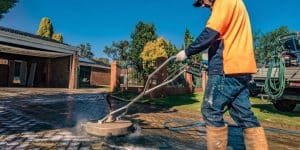
If you’re using a pressure washer, make sure to adjust the pressure setting so you don’t damage the surface of your driveway. High-pressure water can help blast away the oil and cleaning solution, but be careful not to use too much force.
It’s also important to direct the runoff away from gardens or drainage systems, as the oil can pollute water sources and harm plants.
Step 6: Apply a Degreaser
For persistent stains that don’t fully come out with soap and baking soda, consider applying a commercial degreaser or an eco-friendly option like sodium citrate. Degreasers are formulated to break down oil and grease, making them effective for tougher stains.
Follow the manufacturer’s instructions when applying the degreaser. After some time, scrub the area again to lift the remaining oil. Then rinse the area thoroughly with water.
Step 7: Repeat if Necessary
In some cases, a single cleaning attempt may not be enough to completely remove the oil stain, especially if the stain is old or has deeply penetrated the surface. If you’re not satisfied with the results after the first attempt, repeat the process from the beginning. You can also try a stronger commercial cleaner specifically designed for oil stains.
Persistence is key when it comes to stubborn oil stains. It may take a few tries to get your driveway looking spotless, but the effort will be worth it.
Step 8: Prevent Future Stains
To avoid future oil stains, regularly inspect your vehicle for leaks and address any issues right away. You can also apply a sealant to your driveway to create a protective layer that will prevent oil and other stains from soaking into the surface.
Regularly clean your driveway and ensure that any spills are dealt with quickly to prevent them from becoming stubborn stains.