

Many options are available for paving to homeowners, but sandstone paving has become one of the most popular options for the outdoor living area. Sandstone is a type of natural stone famous for its elegance and longevity. It is used for patios, sidewalks, and driveways. In this guide, you’ll learn all the basics of laying sandstone paving and all the factors you need to consider to make the project successful and get the best look.
Before You Start
Before you begin, there are a few things you should consider:
- Check the weather:Carry out the sandstone paving on a dry day because rain or wet conditions may make the stones slip or develop unevenness.
- Mark out the area:This you can do by using spray paint to check the general area where paving is required or using stakes to demarcate the specific location. This way, you will be able to visualize how everything will look in the end and, at the same time, determine if you will need more sandstone paving to accomplish the project.
- Acquire the necessary tools:For sandstone paving, you will require a shovel, edger, tamper, leveling kit, measuring tape, and a power washer or broom.
Preparing the Base
It is important to lay down the right base to achieve the best result of sandstone paving. More often, it becomes uneven, cracked, or unstable if the ground it was laid upon is not strong enough.
- Dig up all the grass and plants from the planned project area by using a shovel.
- It is recommended to level the ground where the pavement will be constructed using a shovel or a power tiller. This will give a smooth and even base on which your other materials can be applied.
- Use a plate compactor or tamper to tamp or compact. This will help avoid future settling and guarantee an even base.
Laying the Subbase
A subbase is an additional layer on your sandstone paving that cushions the structure.
- You pick a subbase material like gravel or crushed stones. The materials can be purchased in most home improvement stores.
- Make sure to spread 100mm – 150mm of subbase material over the compacted soil with the help of a shovel or a wheelbarrow.
- Level the subbase material and compact it using a plate compactor or tamper.
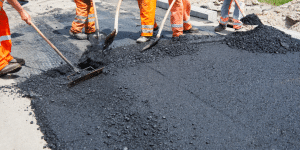
Laying Down the Sandstone Paving
As the previous steps have been established, it is possible to put down the sandstone paving now that the base and subbase are already in place.
- It is also important to measure and mark out your paving area so that your layout has a certain amount of balance.
- The installation of the sandstone paving begins from the center of the area and spreads outwards. This will assist in making sure that the ground that you are paving stays level as you lay down paving.
- Clean off the surface of the paving stones by forcing water pressure or broom over the paving stones before laying them as planned. Dispose any debris or dirt that may impede adhesion.
- The first course of stones is placed, and the subbase is in contact with these stones. A spacer is recommended to get the proper distance between the rocks.
- Level the stones so that you have a flat working surface with all the large rocks having been rearranged properly.
- After the sandstone paving is installed, a leveling kit will be used to ensure every stone’s ground level matches its counterpart.
Grouting the Sandstone Paving
Grouting is an important step in the final step of sandstone paving, which protects the stone from moisture.
- Look in the package for the directions on using the grout that is appropriate for the sandstone.
- The trowel will scrape the grout between the stone paving joints and spread the grout into the space between the joints. Emerge the joints fully, but do not let the grout come to the surface of the stones.
- Allow the grout to dry for the time specified by the manufacturer’s instructions.
- To clean the paving stones surface up through extra grout, you should use a sponge or a brush. This will assist in ensuring that your sandstone does not lose its standard appearance.
Sealing the Sandstone Paving
Sandstone paving sealing is not compulsory but highly encouraged since it protects the stones from staining.
- Choose a particular sandy stone sealer to run on the paving stones and follow the instructions included with the sealer.
- Successfully decorate the sealer using a sprayer or brush on the sandstone paving and cover the entire surface of the sandstone.
- After applying the sealer, allow it to dry for the required time as the manufacturer recommends.

Care of Your Sandstone Paving
Maintenance is required for your sandstone paving to last longer and be aesthetically appealing.
- Its maintenance involves sweeping the paving frequently to clear off the dirt, leaves, and other chucks that may find their way on the paving.
- Clean the sandstone paving with water using a power washer or hose whenever necessary. Do not use strong chemical solvents or scratchy cleaners because they will certainly deteriorate the stones.
- Any cracks or damage to the sandstone paving found should be repaired immediately.
Installing sandstone paving is one of the most gratifying home improvement projects that boosts curb appeal. If you take proper care of your sandstone paving, you can be sure its beauty will last long time.