

An essential aspect of patio cleaning is maintaining a clean and well-lit area to enhance the outdoor space’s longevity and look. Patio paving, which can be made of concrete, bricks, stones, or tiles, needs to be cleaned frequently to maintain its look for longer. You will find a comprehensive, step-by-step guide on cleaning patio paving along with some helpful tips in the paragraphs that follow.
Understanding Your Patio Material
Before starting the cleaning procedure, you should know the kind of material that was used to construct the patio. Because cleaning methods and solutions differ based on the fabric, each material should be cleaned using its own set of guidelines.
Here’s a brief summary:
Concrete: It is quickly soiled and susceptible to mildews, it is robust and has a wide range of uses.
Brick: Despite its ability to absorb moisture and dirt, brick remains one of the most resilient materials.
Stone: Stones like slate and travertine, which are delicate and porous, are another material type with good adhesion.
Pavers and Tiles: These include natural stones and ceramics, and each one needs a distinct cleaning technique.
Getting Your Materials Together
As previously mentioned, you’ll need a few basic items to clean the patio paving.
Cleaning with water: The surfaces are rinsed with a pressure washer or garden hose.
Stiff bristled broom: is used for thorough floor sweeping, which aims to get rid of any dirt or extraneous elements that could be present.
A bucket and mop: For more thorough cleaning.
Cleaning supplies: You should use a washing solution that contains detergents diluted in water.
White vinegar or baking soda: These are used for general cleaning.
Brushes or pads for scouring: For extremely tough stew stains.
Gloves and eye protection: For safety, wear gloves and eye protection.

Step-by-Step Cleaning Process
Get rid of any loose debris
To start, sweep the patio with a standard broom with broad bristles to get rid of any loose dirt, grass, or leaves that may have fallen on the patio floor. This step is crucial to preventing additional surface scratches during the washing process.
Clean the surface
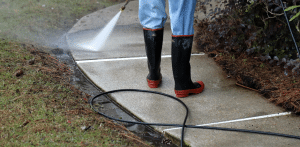
Use a garden hose or a pressure washer to rinse the patio’s surface area. One must start with a lower setting when using pressure washers because this can cause harm to natural stone paving.
Get your cleaning solution ready
Add a mild detergent to a dish of water and thoroughly stir. For obstinate stains, the carpet’s surface can be treated with diluted white vinegar, water in an equal amount, or baking soda to make it more natural. Therefore, before applying any solution to a wider section of the pavement, apply it to a hidden spot and see if it leaves any stains on the pavement.
Clean the patio
Simply scrub the surface in circular motions using a mop or scrub brush and your cleaning solution. It is best to focus on areas with mildew and stains when it comes to brick and concrete. Avoid using force on stone as this could cause scratches on the surface.
Give it a good rinse
Wash the entire surface with water after using soap or another cleaning solution. You can use a pressure washer here, but be careful not to push too hard, especially if the material is sensitive.
Take care of stains
You must prepare a solution of baking soda and water if the surface is still greasy or rusty. After applying it to the afflicted area and waiting for at least 15 to 20 minutes, carefully wash it off. Regarding the oil stains, you can apply cornstarch to the stain’s location, let it there for a while to absorb the oil, then sweep it up and clean the floor.
Examine and Dry
You should let your patio air dry completely. Once the surface is cleaned examine if there are any stains or blotches. If there are any stains, repeat the process.
Tips for Deep Cleaning and Seasoning
Nonetheless, it is crucial to remember the cleanliness principle and the distinction between seasonal and general cleaning.
Here are some more practical tips for keeping a high-quality patio:
Winter Maintenance
The impacts of ice and salt on patio pavements are typically detrimental throughout the winter months. To ensure that there is no salt residue on your patio, it is recommended that you wash it often. Since sand is far less abrasive to the surface than salt, it is advised to use it for gaining grip.
Refresh for Spring
Spring cleaning can be regarded as thorough and in-depth. Make sure there are no twigs, dried-up leaves, or other waste on your patio area.
Seal and Protect
Regardless of the type of material selected, sealing the patio is advised to protect it from moisture and discoloration. Sealants are particularly helpful in absorbing excess moisture and fluids from materials like brick and stones that are known to be porous.
Eco-Friendly Cleaning Options
Here are a few cleaning techniques that can be used while paying close attention to the environment:
White Vinegar solution / Baking Soda: Baking soda and white vinegar solution are two obvious options because they are both multipurpose cleansers that work well on the majority of stains.
Essential Oils: To strengthen your cleaning solution’s antibacterial properties, add a few drops of eucalyptus or tea tree oil.
Orange-scented cleaners: These are the finest for oily and filthy surfaces, it adds a hint of freshness.